Using GMS (Genome MIDI Sequencer) to drive a littleBits synth using the new MIDI bit.
Tag: experimental
Experimental anything really. I love things that are an experiment, be it music, art, electronics or most other things.
Pebblits from the Pebble hackday
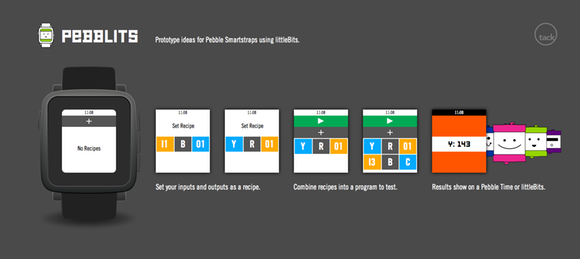
I thought I’d take a look at the stuff that was made at this event to see if there was anything of interest. There was, and this was the most interesting of all. As I’m both a littleBits user and a Pebble Time owner this is of especial interest to me. I hope that they do release their app to the Pebble store as I’d really like to tinker with this. However, even if they don’t I’ll be looking at their videos to see what they’ve done and how.
And then Phoenard arrived

I’d sort of forgotten about funding this on Kickstarter until it arrived. I’m not entirely sure what I’m going to do with it. I did have a couple of ideas, and I’m sure I wrote them down somewhere, so I’ll have to look them out and see what I can do with it.
I’m sure it’ll find a place and I’m sure I’ll have some fun with it too.
Moog Soundlab residency: Iain Forsyth & Jane Pollard Performance
After being at one of these performance I’d booked to go again, expecting, not unreasonably, for it to be of a similar format to the previous Moog Soundlab event at the Ace Hotel in Shoreditch. I was wrong. At least, I was for the most part wrong. It was similar in the sense that there was the same enormous (or at least enormous by my standards) Moog modular rig being used. However, I was different in more or less every other aspect.
To illustrate I took a photograph of the letter that every received (on their chair as they arrived) and were asked to read.
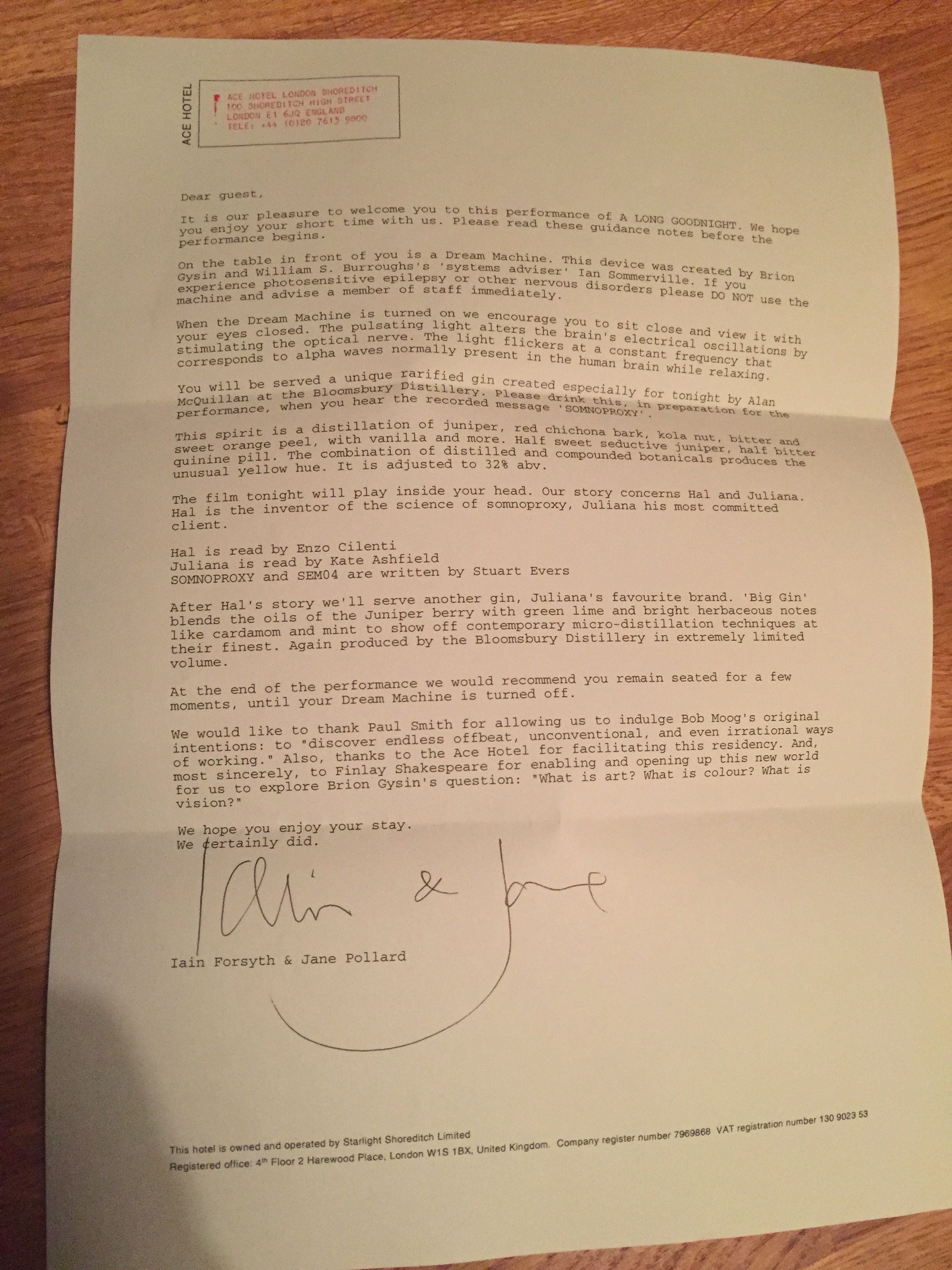
I think you’ll agree that this is really quite unusual. As were the two glasses of gin that did arrive and were, at least to my taste, nothing like the gin I’m used to.
In fact, as an event it was more like something I might see at the Edinburgh Fringe Festival, rather than in London, so from that perspective, I loved it.
Moog Soundlab residency: Dave Colohan

This was a lovely little event, and when I say little I really do mean it. The audience was tiny in a tiny little basement bar at the Ace hotel in Shoreditch. It’s a nice venue though. The performance lasted a hour and was very interesting and used a lot but not all the equipment.

I find it interesting to watch a modular performance like this to see how the music is actually generated and sustained. It isn’t like normal performances at all of course. Quite different indeed.

The arrangements were lovely, with people’s names on their booked seats.
And on each seat was a thing called a “dream machine”, which was a strange light contraption sitting on a turntable. It made an interesting effect though.

So it was an enjoyable evening, good fun, interesting to watch and different environment too.

Unknown Public 2 in pictures
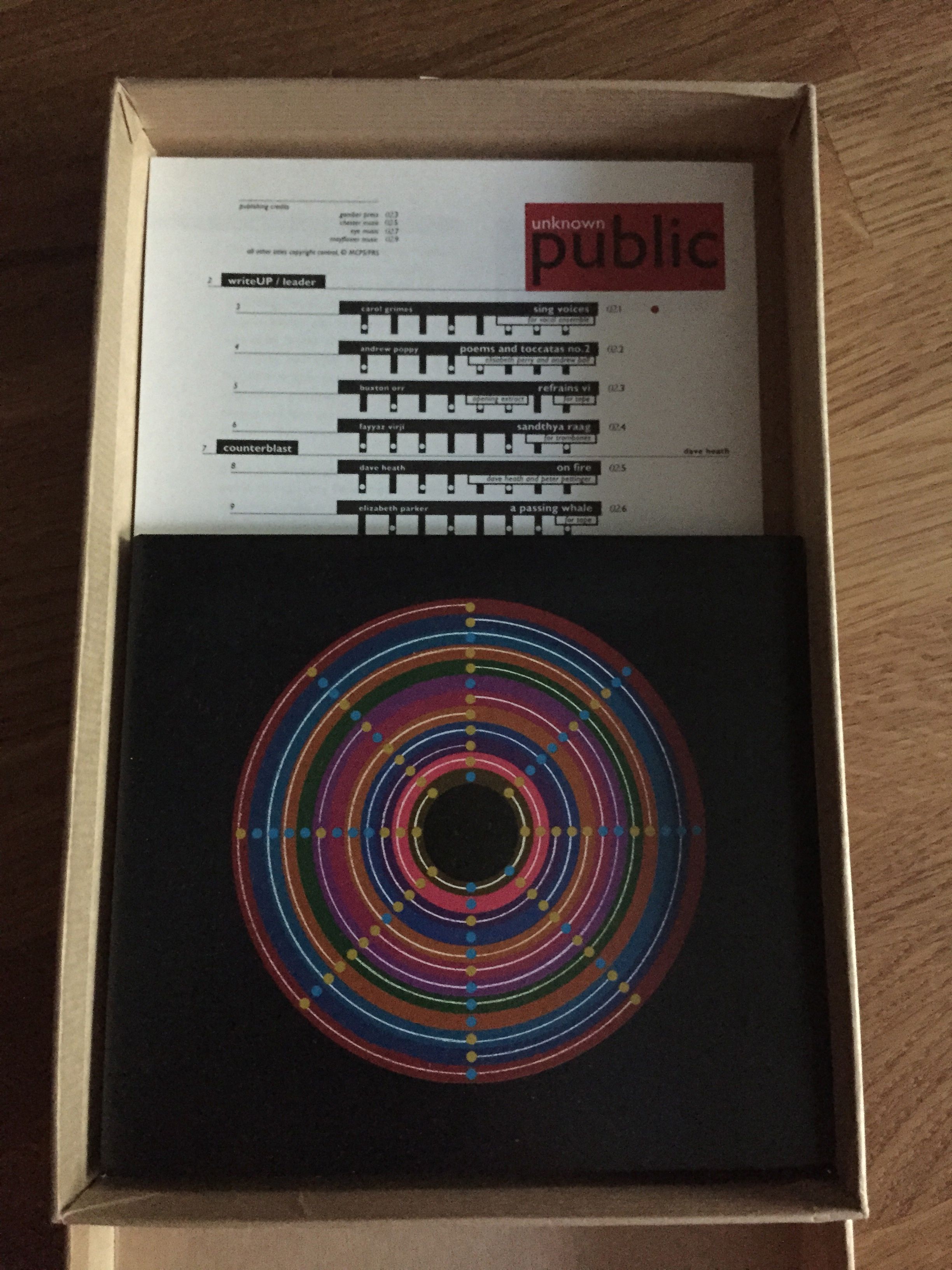


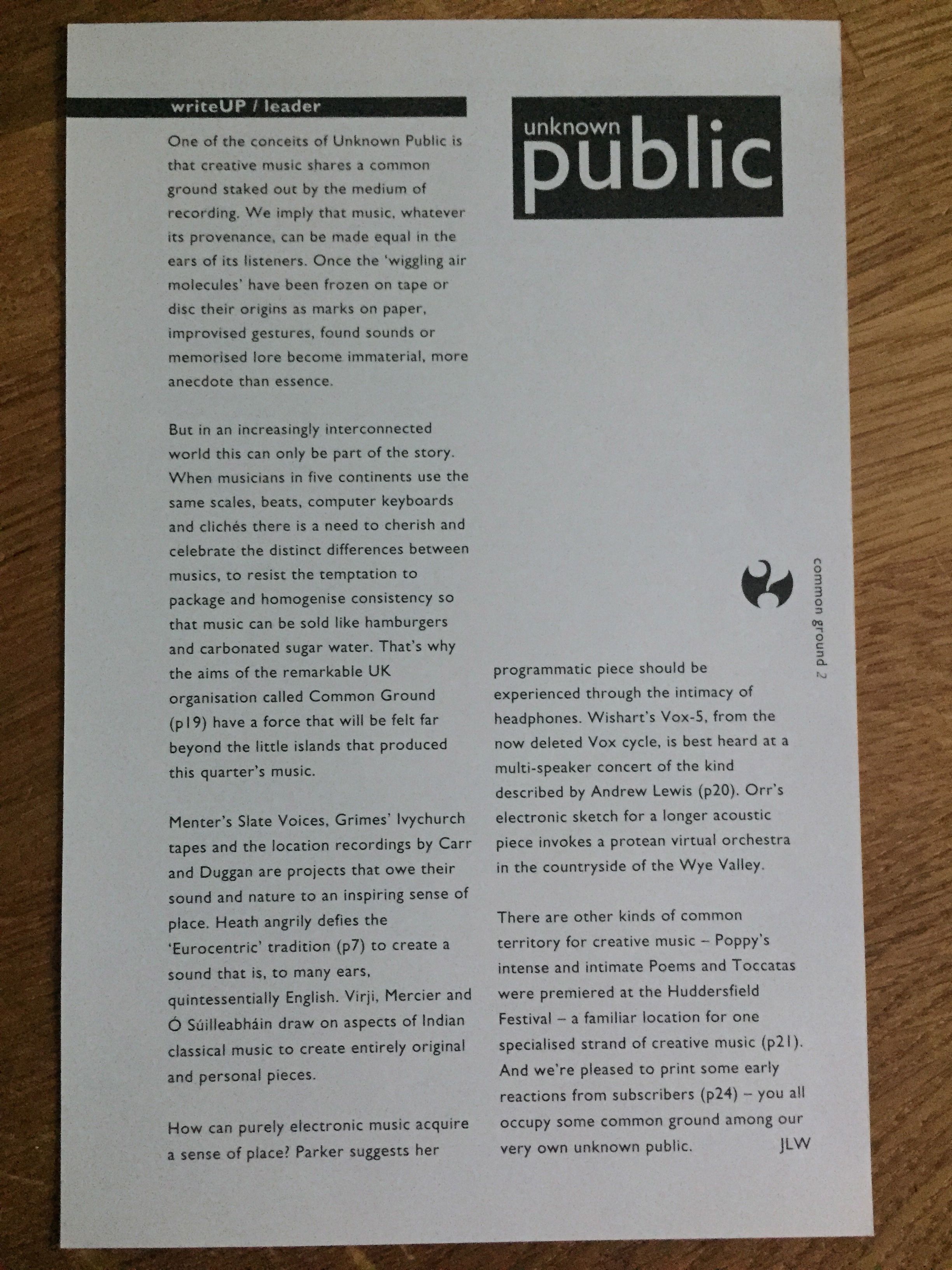
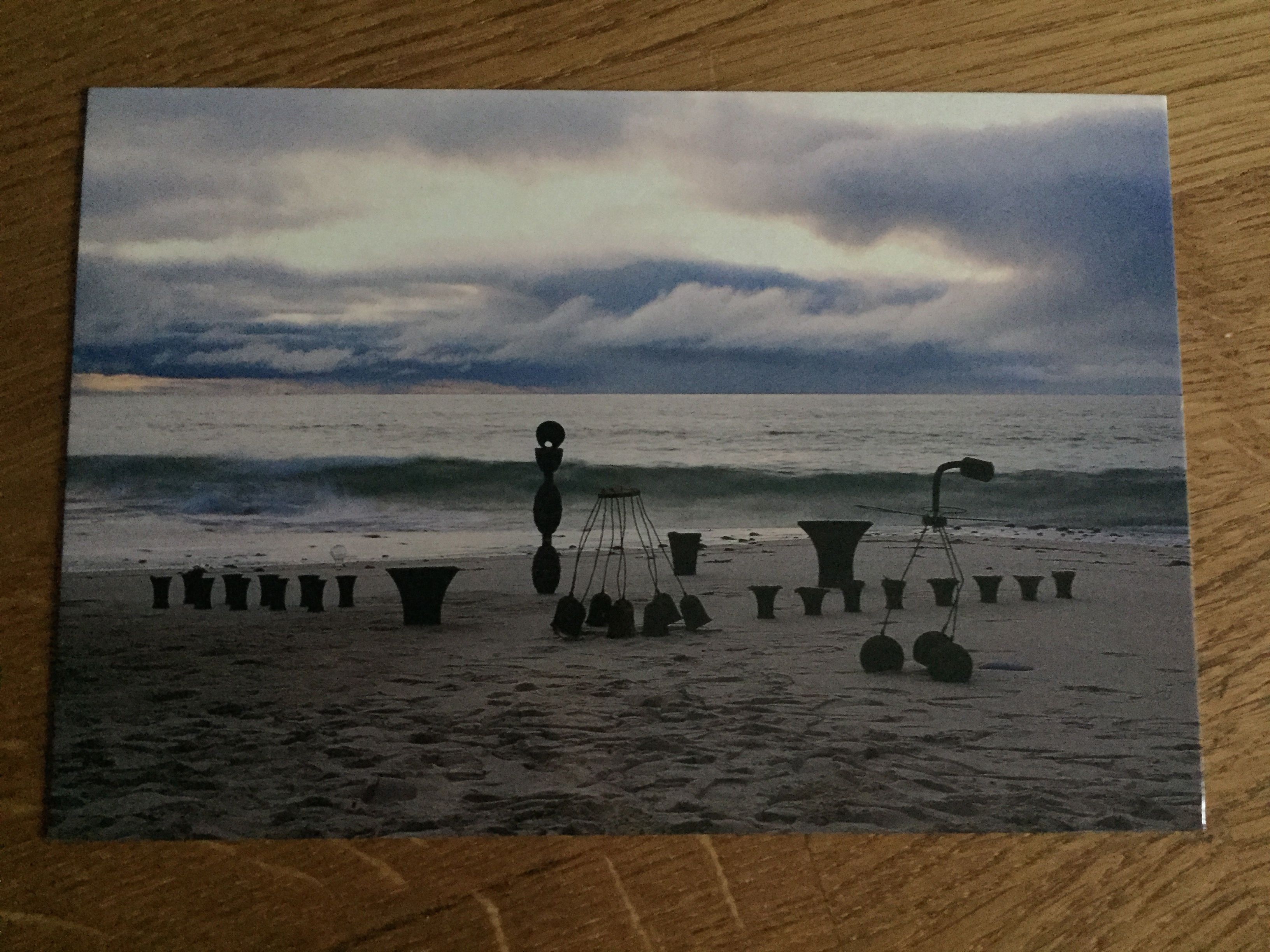
I put up some pictures of Unknown Public 1 and I thought I’d continue with that and show the next in the series. From issue two I moved from cassette to CD, as you can see.
Uncommon Deities … a work of incredible beauty
I’ve had this album for some time but never spent enough to really listen to it deeply, but I did that the other week and found it was a work of almost intense beauty and depth. The words and the concepts are unique and wonderful and executed in such a subtle way it has to be one of the most thought provoking albums I’ve heard in ages.
I really want to listen to it again, in the same sort of environment, with the same attention to listening. It isn’t always something that’s easy to do.
A first go at weaving with Conductive Threads

A little bit of TouchBoard

Weaving with Conductive Thread

A first attempt

Messy
I went to a workshop today on weaving with conductive thread. Not something I’ve done a lot of before, but something I’ve had a previous taste of when I did a workshop of making interactive clothes. However, I’ve never done anything with weaving at all, but it always seemed like a fun thing to try.
So the idea was to weave something small and introduce a couple of conductive thread elements in that could be attached to a microcontroller board like a TouchBoard. In fact, it was a TouchBoard in this instance and that was very straightforward to use as it is nice and easy to connect up.
Well the weaving was ok, in fact easier than I expected although I made a few mistakes. Introducing the conductive thread was simple enough, and as you can see I managed to create a little piece of stuff at the end of it. It worked too. I connected it up to the TouchBoard and it worked a treat. In fact, when I got home I connected it to my Ototo board and that was fine too.
So what’s next? I’m not sure actually. I don’t know quite how I’ll take this forward if at all. There are a few possible applications to it, a few ideas bubbling around, but I need to think about them a bit more first.
Let’s see what happens.
New Ototo sensors and some thoughts on the board itself
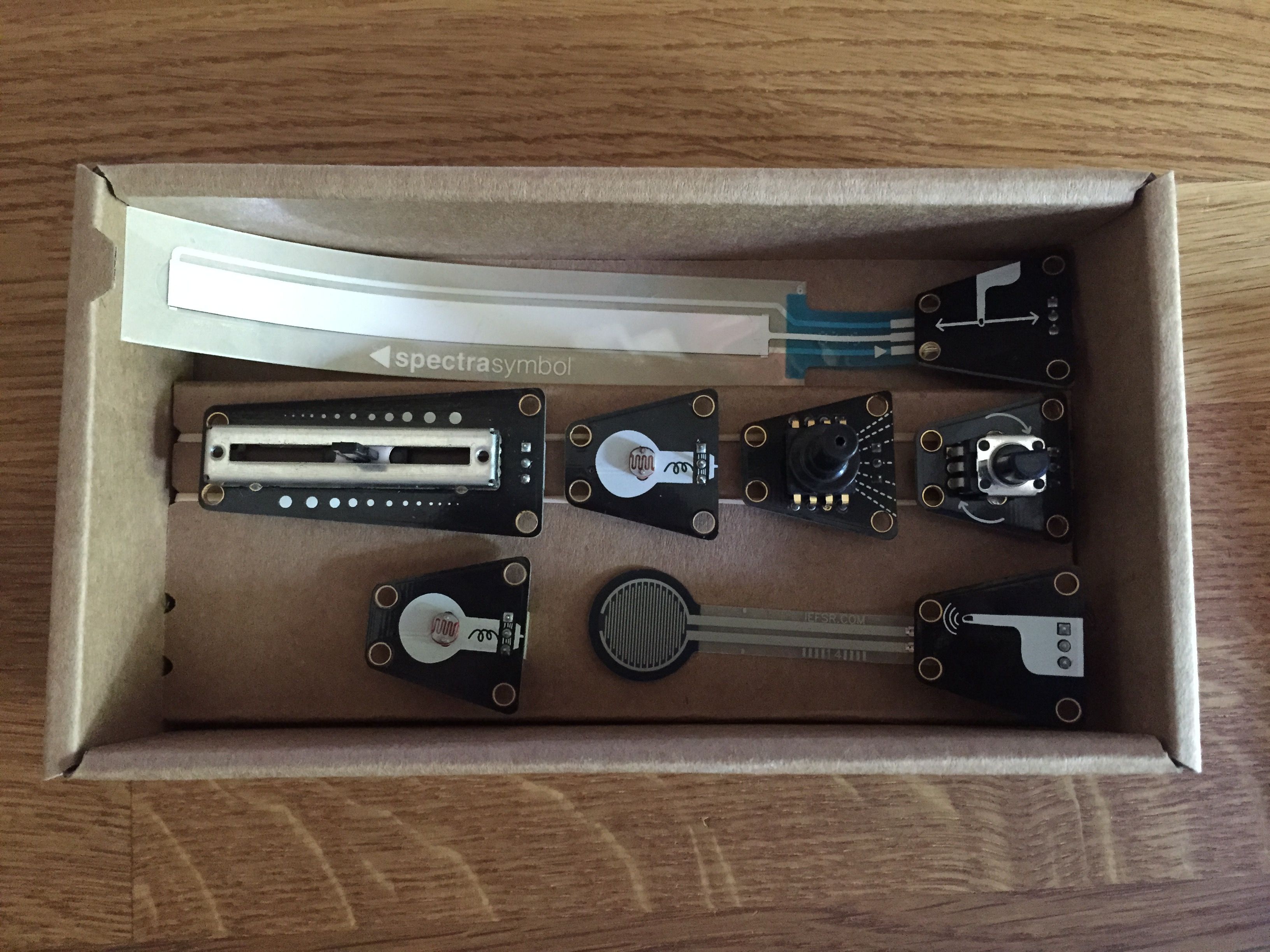
I really like the Ototo board from Dentaku. It’s fun for trying things out and experimenting with ideas. I’ve just bought three new sensors for it, an additional light sensor, a pressure / force sensor, and a ribbon sensor. They’re all very nicely made and to the same high standard as the ones I already have, and, they’ve already been very useful.
But using the board has made me start to think about other aspects of the board. In the Dentaku faq about Ototo it mentions that they’re looking into a way of changing the sounds on the board itself. I think that this would be very useful indeed, as would being able to map the different sensor inputs on any given sound as well. I think it could be done with a simple app either for the desktop of mobile, but it would make the board a lot more useful.
 I am Ashley Elsdon