Back to Reaktor

I decided that I really should get better acquainted with Reaktor. I’ve had the software for ages, and aside from a little tinkering with it I’ve done very little. So I’ve started at the beginning again and decided to work through the tutorials before I dive in to make anything for myself.

Happily it all came flooding back to me when I got to it, and I was able to get going very quickly. One thing that surprises me though is that there seems to be no book about Reaktor. You can find books on almost all other major music applications, but none on Reaktor that I can find anyway.

Not that I’m planning to write one you understand.
Automating field recording

As part of my ongoing experimenting with Android and Tasker I decided to see if I could get tasker to make a recording every morning at a specific time and then send me a text to confirm it was done.

Well of course tasker is more than up to this and this morning it worked relatively well although I’m having a few problems with getting the file to play now, but I’m sure that’s just teething troubles. Once I’ve got that sorted I’ll start to post the recordings.

Music apps I haven’t used in ages: Future Sound

This was an app I got right back at the start of iOS music making. In fact, before it was iOS actually. It was one of the more innovative apps that came out, and more like art than a music making experience. It’s interesting to go back to it now as in many ways some of these ideas have been taken on by the likes of RJDJ in the work they’ve done with their Inception app and also with scenes in general.

I looked up their website and they’re still going, although it seems as though the iOS or mobile world isn’t the entirety of what they’re about, which is good. Interesting to see what they do next, although they don’t seem to have a blog or news feed sadly.

Messing about with Jasuto Pro

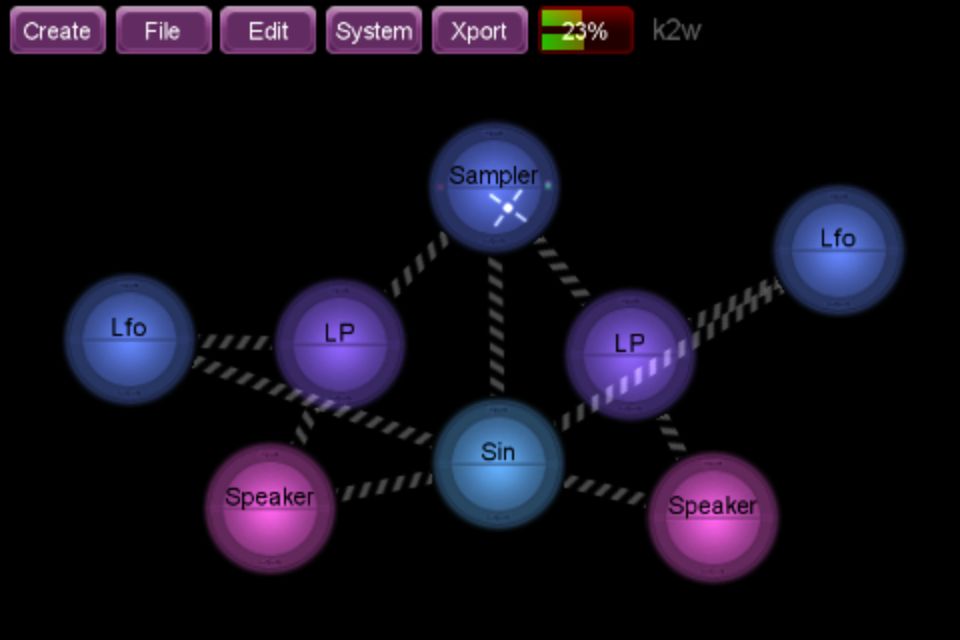
Messing around with stuff is great fun, and if there’s an iOS app that is superb fun, then it’s Jasuto Pro Modular. I haven’t played with this app for ages, and so it’s great to get back into it and discover stuff that I’d started but not done anything with.

The patch, or sketch, or whatever the proper name is, that you can see above uses a sample file that was recorded using RJDJ on a journey home one day. The idea was to record a week of travel sounds using RJDJ and then create patches for it in apps like Jasuto Pro.

I must work out how to get the audio out on this track, but perhaps on another day.

RJC1000 doesn’t work on Lion

That’s pretty much all I can say about that really. I was thinking about making my own scenes and remembered RJDJ’s RJC1000 application for the mac. I’d tinkered around with it before but not to any serious degree, so I thought I’d give it a try again, but it won’t load properly in Lion, so I may have to try running it on Leopard on my old mac mini.

Not ideal, but I can’t see RJDJ updating it any time soon as they’re too busy with loads of other stuff. Not that I’m complaining you understand.

The art of zero tasking

You might have heard of multi-tasking or even mono-tasking, but you may not have heard of zero-tasking. Zero-tasking is the art of being able to do nothing simultaneously. That is, at the same time as doing nothing at all.

I’m working very hard at becoming a grand master of zero-tasking, but it is a lot harder than you think. It’s so easy just to break off and do something. But you must resist!