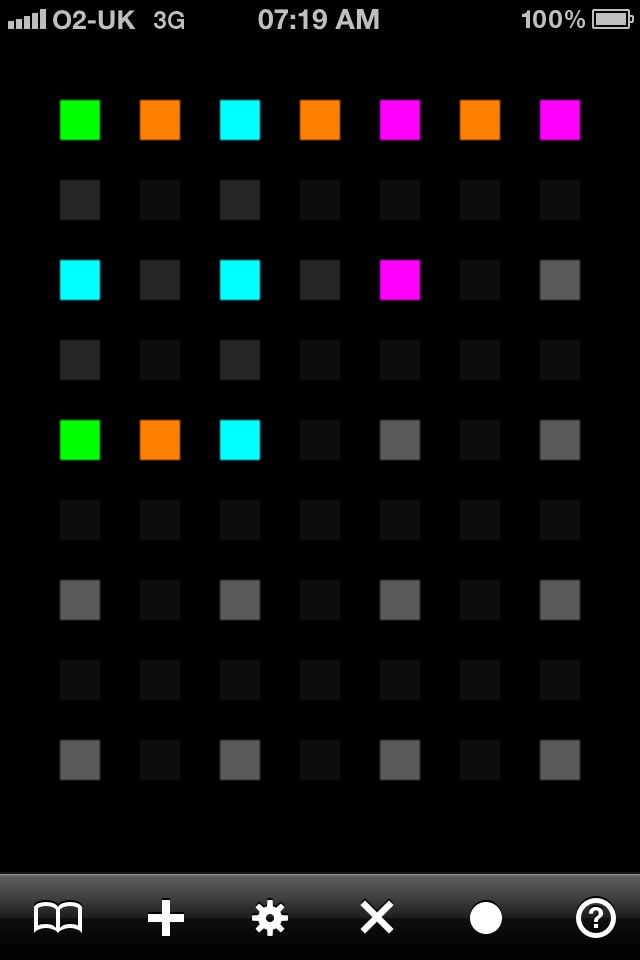
 I was playing with Grid Music this morning and what a great app it is. I’ll put up a little track I made soon.
Category: Creative Process
The ‘creative process’ category is about anything that relates to or influences the creative process.
And that’s on Android too
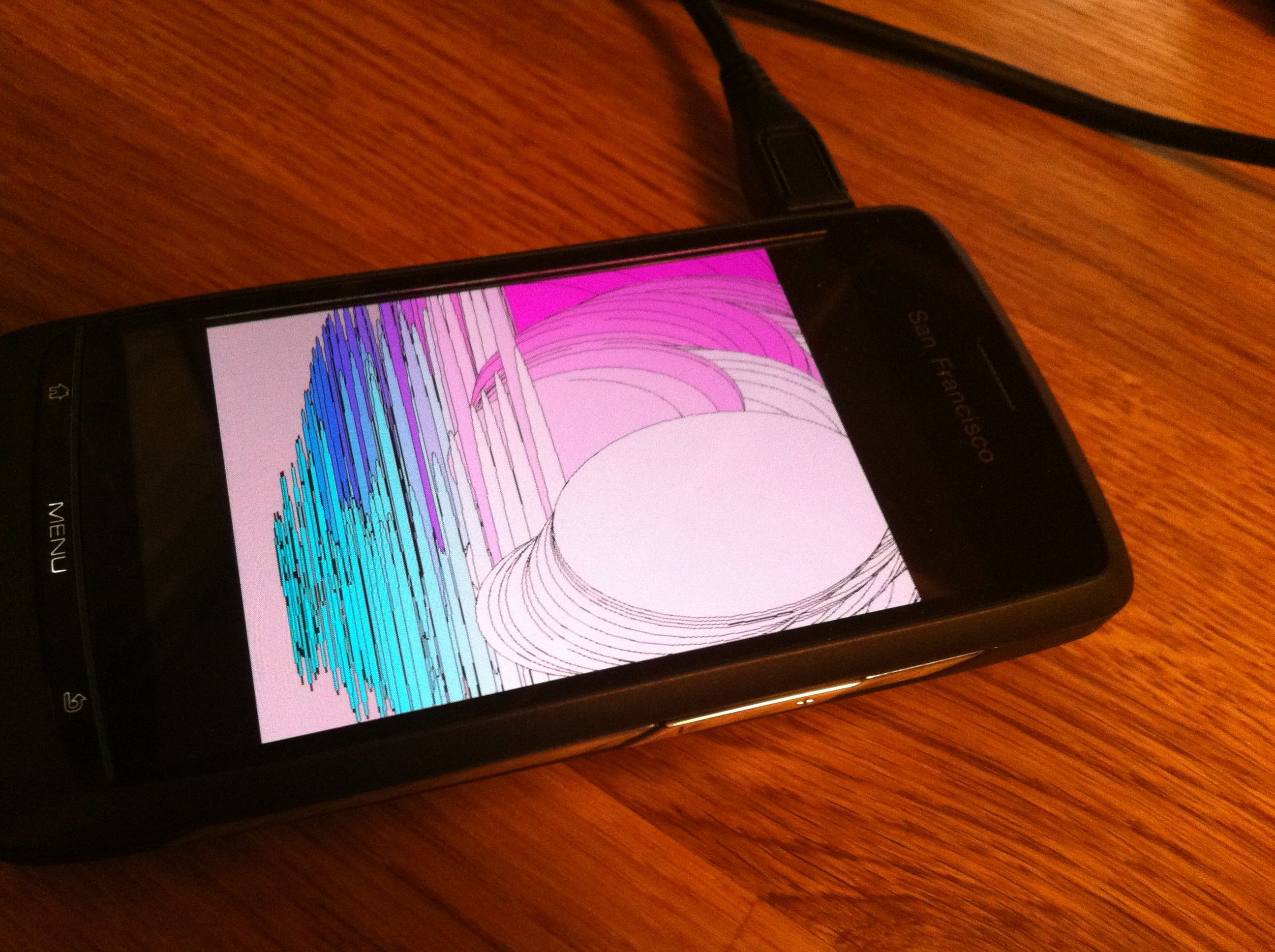 I meant to say that that processing sketch also works really well on my Android phone under 2.2. Nice to be able to run this stuff on Android too.
More Mixtikl fun
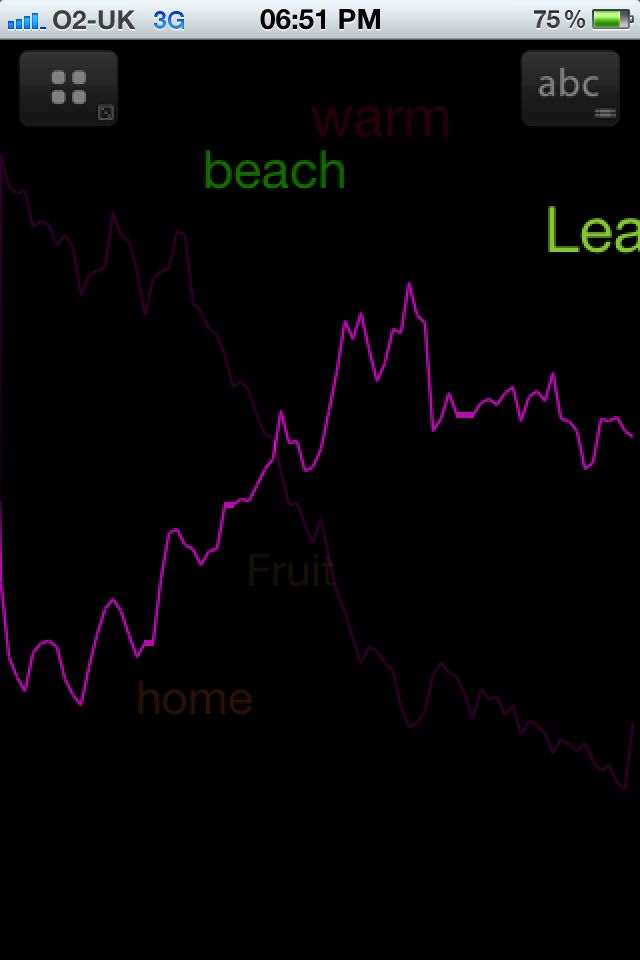 I’m really getting into Mixtikl now, and the new visualiser in the latest version is good too, although I haven’t got the hang of the words as yet.
MixPad running under StyleTap on my 3G
I got MixPad (Palm OS MIDI player / mixer) onto my 3G a few days ago, but I only got some MIDI files loaded today. The results? Excellent. MixPad used the KriKit audio engine and played files back just fine.
Music apps I haven’t used in ages: Future Sound
This was an app I got right back at the start of iOS music making. In fact, before it was iOS actually. It was one of the more innovative apps that came out, and more like art than a music making experience. It’s interesting to go back to it now as in many ways some of these ideas have been taken on by the likes of RJDJ in the work they’ve done with their Inception app and also with scenes in general.
I looked up their website and they’re still going, although it seems as though the iOS or mobile world isn’t the entirety of what they’re about, which is good. Interesting to see what they do next, although they don’t seem to have a blog or news feed sadly.
Messing about with Jasuto Pro
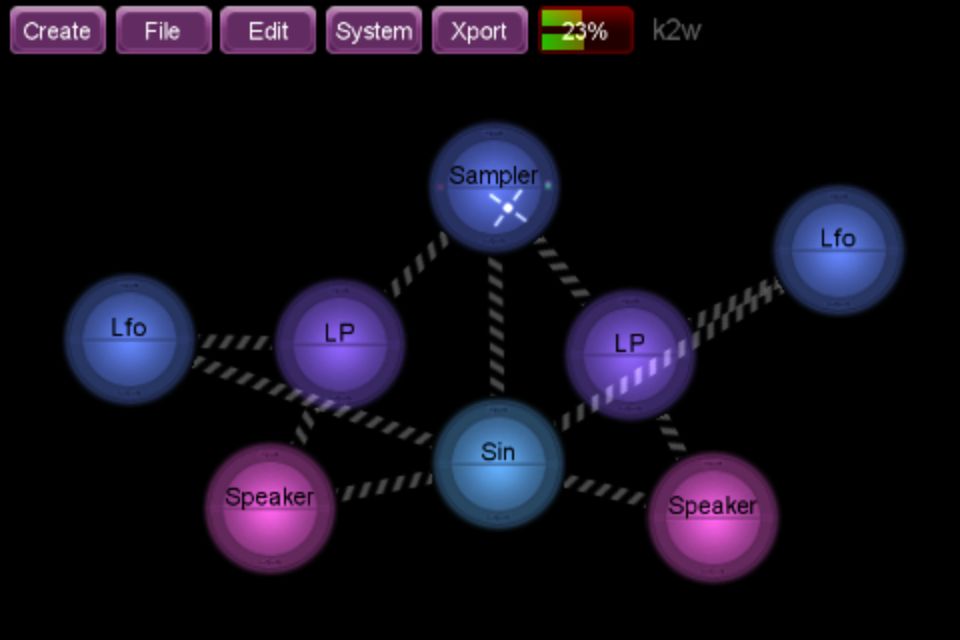 Messing around with stuff is great fun, and if there’s an iOS app that is superb fun, then it’s Jasuto Pro Modular. I haven’t played with this app for ages, and so it’s great to get back into it and discover stuff that I’d started but not done anything with.
The patch, or sketch, or whatever the proper name is, that you can see above uses a sample file that was recorded using RJDJ on a journey home one day. The idea was to record a week of travel sounds using RJDJ and then create patches for it in apps like Jasuto Pro.
I must work out how to get the audio out on this track, but perhaps on another day.
RJC1000 doesn’t work on Lion
That’s pretty much all I can say about that really. I was thinking about making my own scenes and remembered RJDJ’s RJC1000 application for the mac. I’d tinkered around with it before but not to any serious degree, so I thought I’d give it a try again, but it won’t load properly in Lion, so I may have to try running it on Leopard on my old mac mini.
Not ideal, but I can’t see RJDJ updating it any time soon as they’re too busy with loads of other stuff. Not that I’m complaining you understand.
Handmade Electronic Music
I love this book. I have the paperback edition somewhere but I can’t find it right now, so I decided to buy the iBooks version as part of a plan to be able to make some of the circuits using iCircuit on my iPhone.
I realise that this sort of defeats the object, but when you’re on a train it isn’t easy (or advisable) to start soldering. There would be unpleasant consequences I should imagine.
Anyway, that’s my plan, and we’ll see how it works out, but if you don’t know this book, then it is excellent if you want to get into DIY electronics.
Mindstorming
After a long time I’ve got a new idea for a mindstorms project. I think it’s going to take me a fair while to get it working. Even so, it’s good to have a new idea to work through and think about. Hopefully I’ll have something to show at some point too.
About The Ethometric Museum
I was at the Edinburgh festival at the end of August this year and saw a bunch of shows. Some good, some not so good, some amazing. The Ethometric museum fell into the last category without a doubt.
We arrived at the venue and waited for the start of the show. We didn’t know what to expect at all. Just before the show was about to start a woman in a tweed suit asked us if we were here to see the Ethometric museum. We went with her out of the venue and around to the back of the building. She explained that we would need to wear hard hats for the duration of the show.
We went into a cellar under the building that was dimly lit and filled will racks of strange looking old machines. They looked like something out of the 1950’s. The woman gave us a 5 minute talk about the Ethometric museum and then explained that we would need to be completely silent during the demonstration.
What followed was an incredible performance of noise makers and synths that I absolutely loved. It was a triumph of making and music. The instruments were so beautifully made and the sounds so unique, it was a superb experience.
If you’d like to know more about The Ethometric Museum you can find information at Ray Lee’s site.
 I am Ashley Elsdon